
The LinkedIn Power Shift: How Real Voices Are Taking Over the Platform in 2026
Our October report breaks down the 2,000 most influential creators across 50 countries and industries, and why authenticity, not reach, now defines success on LinkedIn.

LinkedIn feels different lately.
The tone, the feed, the type of content that works: everything has shifted. Our new Favikon Global LinkedIn Report tracks over 2,000 leading creators across 50 countries and 50 industries.
The data shows one clear trend: LinkedIn has become the platform for authority, not visibility.
Let’s unpack what’s happening.
1. The US still leads, but the world is catching up fast
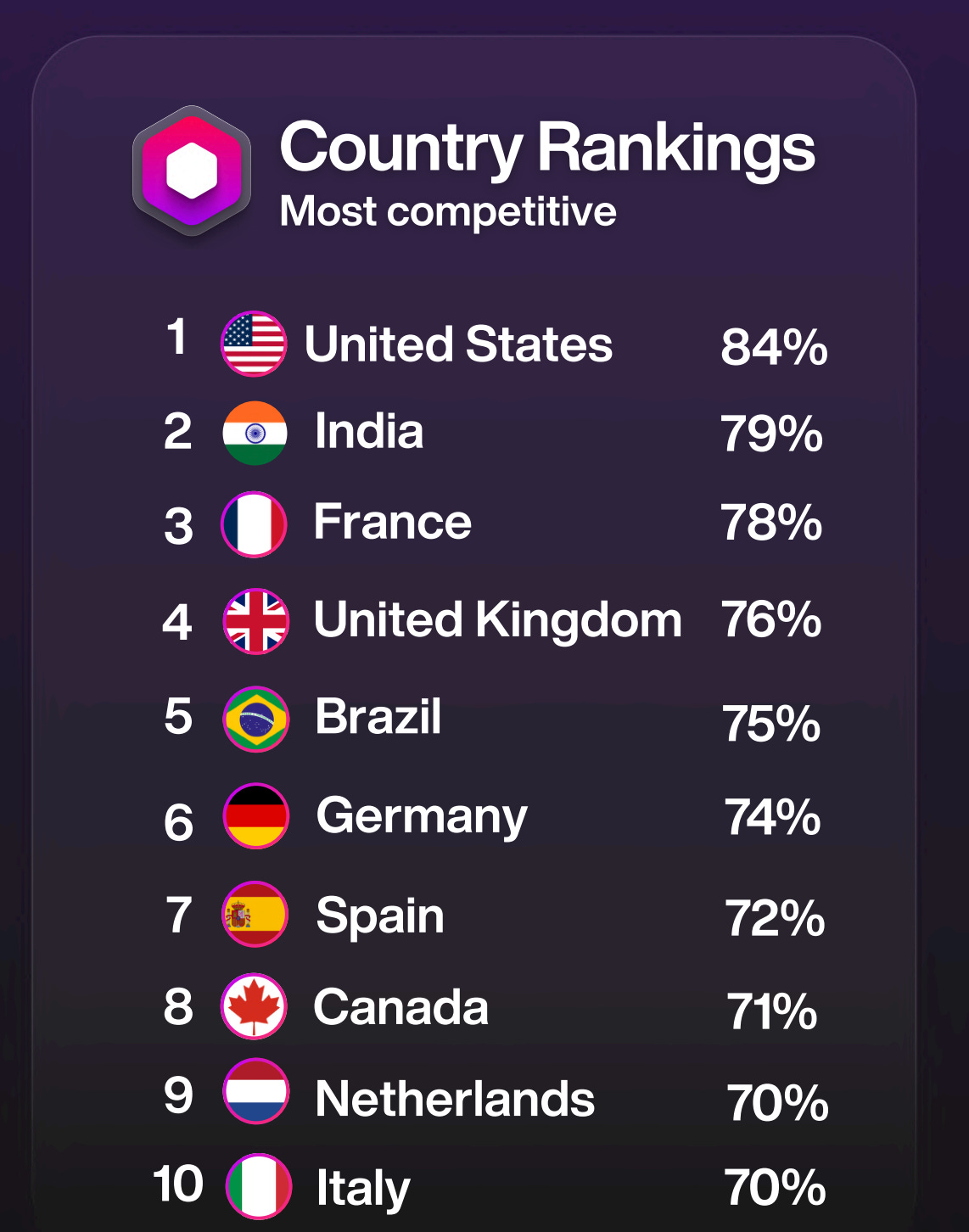
The United States remains the most competitive country on LinkedIn, with a competitiveness level of 84%.
That means it’s the toughest country to stand out in. Everyone’s already posting, and the bar for authority is sky-high. Good luck getting to the top 200, let alone the top 10.
But even there, the type of creators leading the charge has changed. It’s no longer marketing teams running company pages. The voices dominating LinkedIn today are CEOs, tech leaders, and senior operators who speak from hands-on experience. They post less often, but when they do, people listen. Their content is grounded in what they build and manage every day, and that’s exactly what the algorithm now rewards.
Right behind the U.S., India sits at 79%. The Indian creator scene is now massive, especially in business, startups, and tech. Many are posting in English, making their reach global overnight.
France comes next at 78%, powered by storytelling and personal branding. The French creator ecosystem has become one of the most active in Europe, with posts that mix culture, lifestyle, and professional insight in a unique way.
Other strong markets:
Brazil (76%) is Latin America’s most dynamic market, with creators mixing entertainment and business.
Germany (75%) continues to dominate in B2B and SaaS topics.
Spain, Canada, and the Netherlands (70–74%) form the second tier of solid, mature creator markets.
Italy and the U.K. (70-76%) close the top ten with steady engagement and strong cross-border networks.
The most interesting change is what’s happening outside this top ten.
Nigeria, Egypt, and Kenya have seen creator activity explode this year. Engagement doubled in many professional niches.
Saudi Arabia and the UAE are growing bilingual ecosystems (English and Arabic) where creators mix Western business trends with local context.
Brazil and Mexico now anchor Latin America’s B2B creator scene.
LinkedIn is no longer centered on the U.S. and Europe. The creator map is now global, and it’s diversifying fast.
2. Leadership and AI dominate the most competitive niches
Across all industries, the most crowded and competitive spaces are now tied to expertise and leadership.
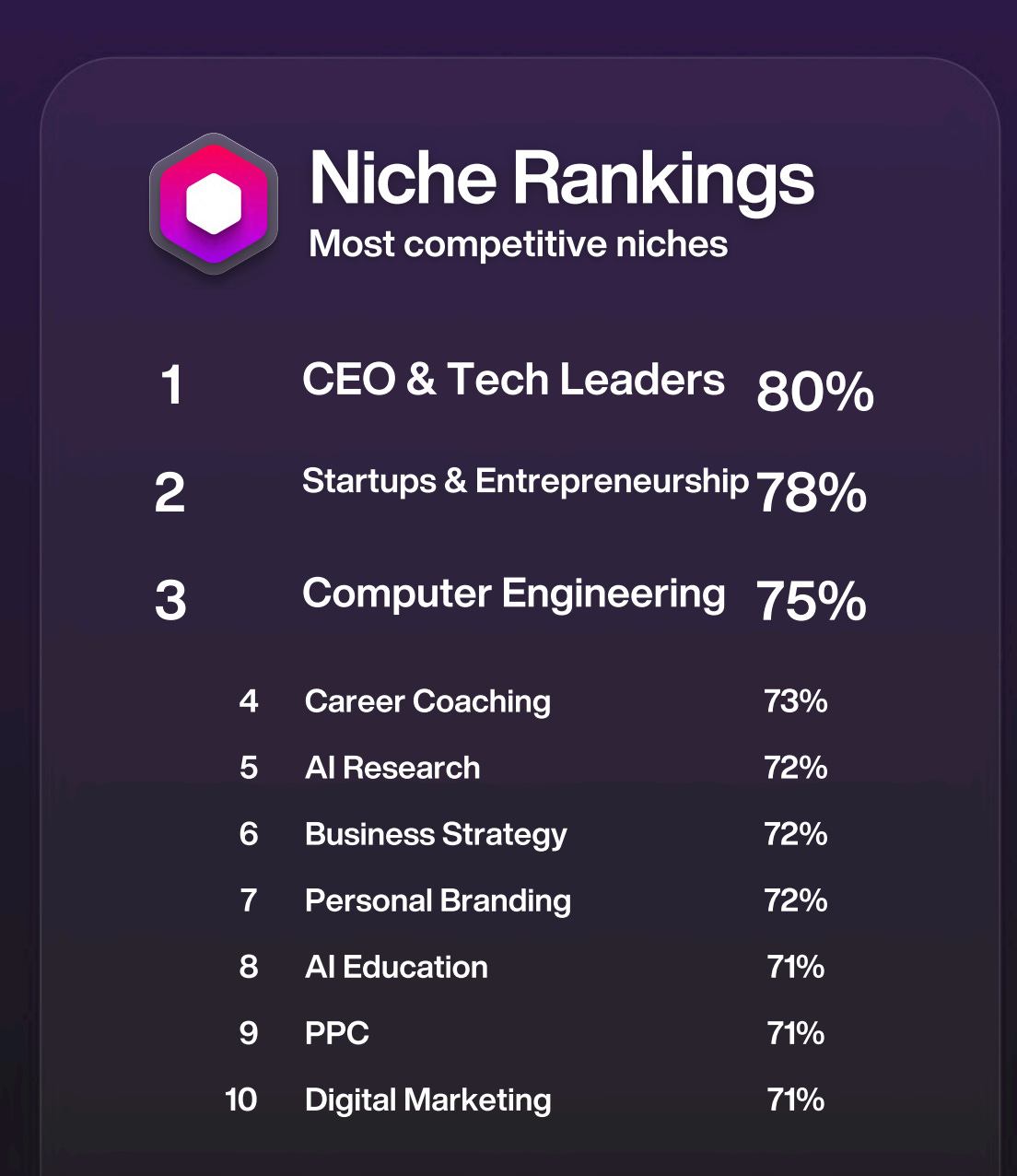
The top three right now:
CEO & Tech Leaders – 80%
Startups – 78%
Computer Engineering – 75%
These are the people shaping the future of work, product, and technology, and they’re posting daily.
What’s even more telling is how AI has taken over LinkedIn.
A year ago, AI was a side topic. Now, AI Research, AI Education, and AI Safety together make up more than 10% of the global top 2,000 creators.
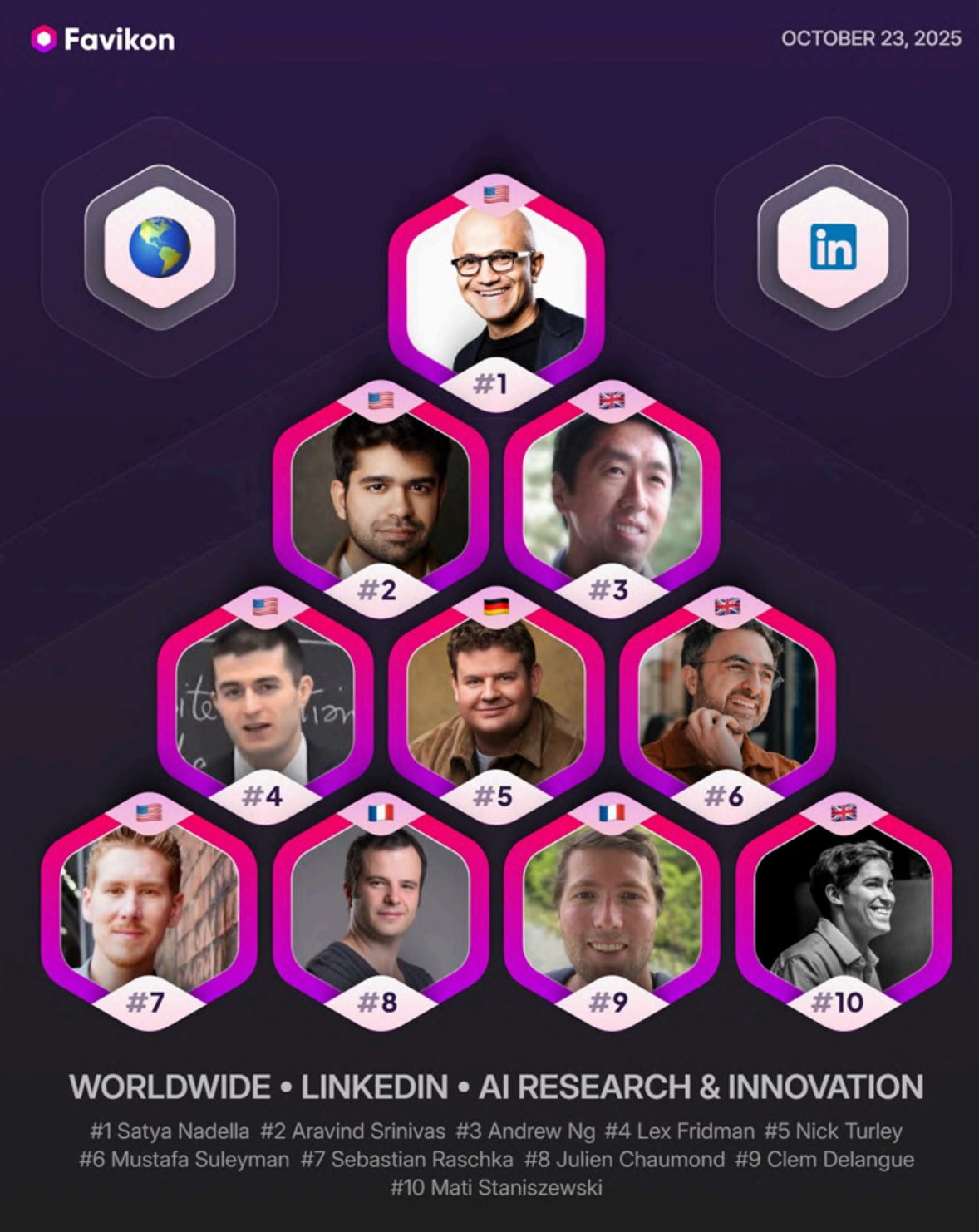
Creators who can explain complex AI concepts in simple, practical terms are building huge audiences in record time.
Personal Branding and Career Coaching remain strong, but their growth has leveled off. They’re no longer the fastest-growing categories, just the most stable ones.
Meanwhile, Sales and SaaS creators are seeing something new, retention. Their audiences stick around longer, engage more consistently, and turn into real business opportunities.
In short: 2025 is the year of the operator-creator: people who share what they’re building, managing, or coding, not theories.
3. Authenticity now beats virality
For years, growth on LinkedIn meant playing the algorithm: engagement pods, emotional hooks, and viral templates.
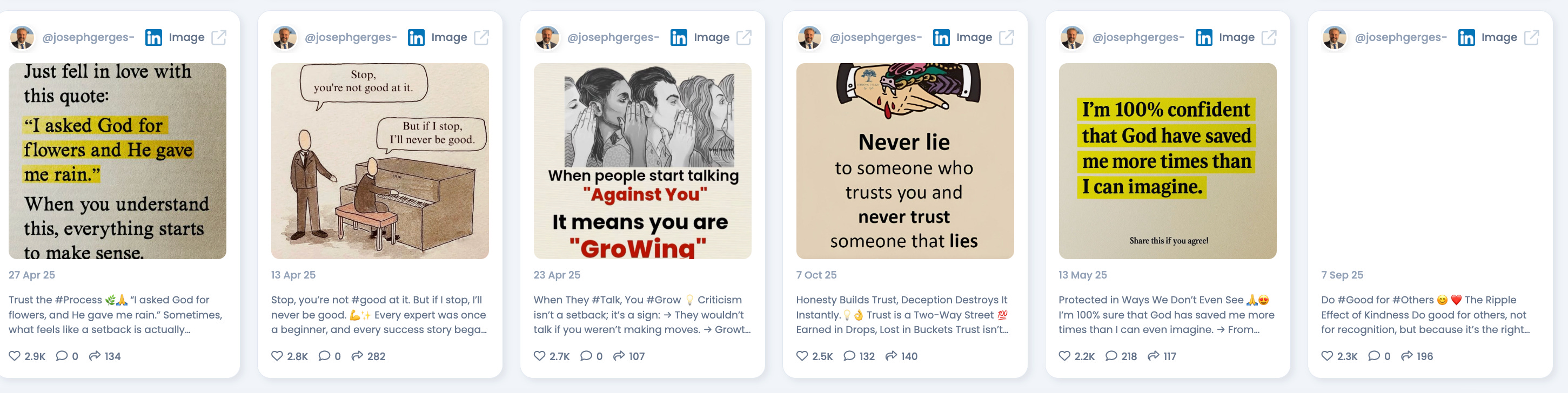
That era is over.
The Favikon Authenticity Score shows a clear pattern.
Creators who post original thoughts, reply to comments, and build trust through real expertise are growing faster than those chasing impressions.
✅ What works now:
Clear, text-based posts
Honest, experience-driven content
Transparent profiles with job titles and proof of expertise
Genuine engagement in the comments
❌ What doesn’t work anymore:
Over-optimized carousels
Stock phrases
Paid engagement groups
Look at Anton Osika’s example vs the one before:
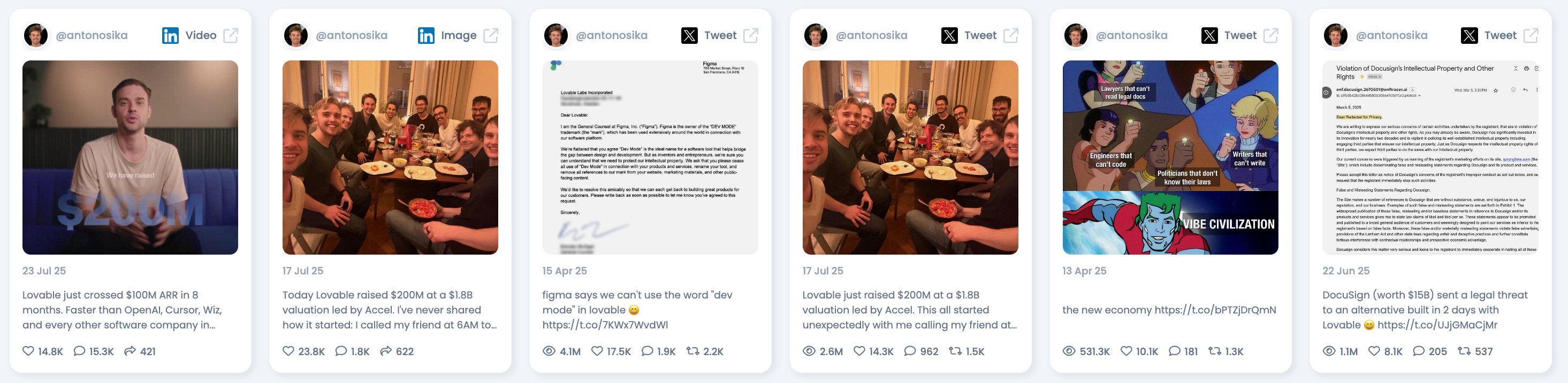
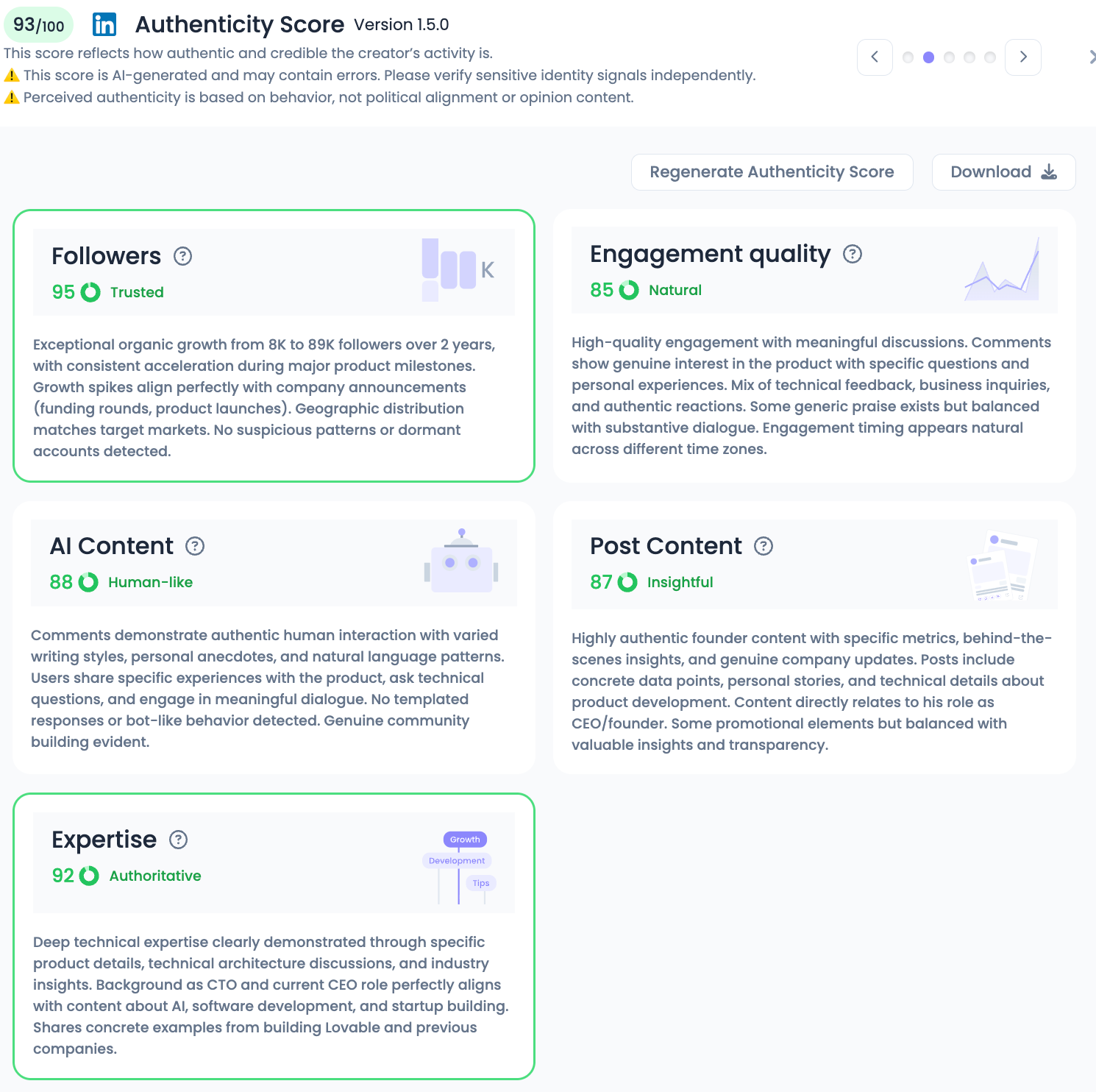
Anton tells a story. He’s not trying to get likes on LinkedIn. The other creator is the opposite.
In short, LinkedIn is rewarding credibility. You can’t fake that.
It’s now better to post less often but say something real.
4. What’s next: the new AI-powered Favikon
All these shifts in behavior led us to rebuild Favikon from the ground up.
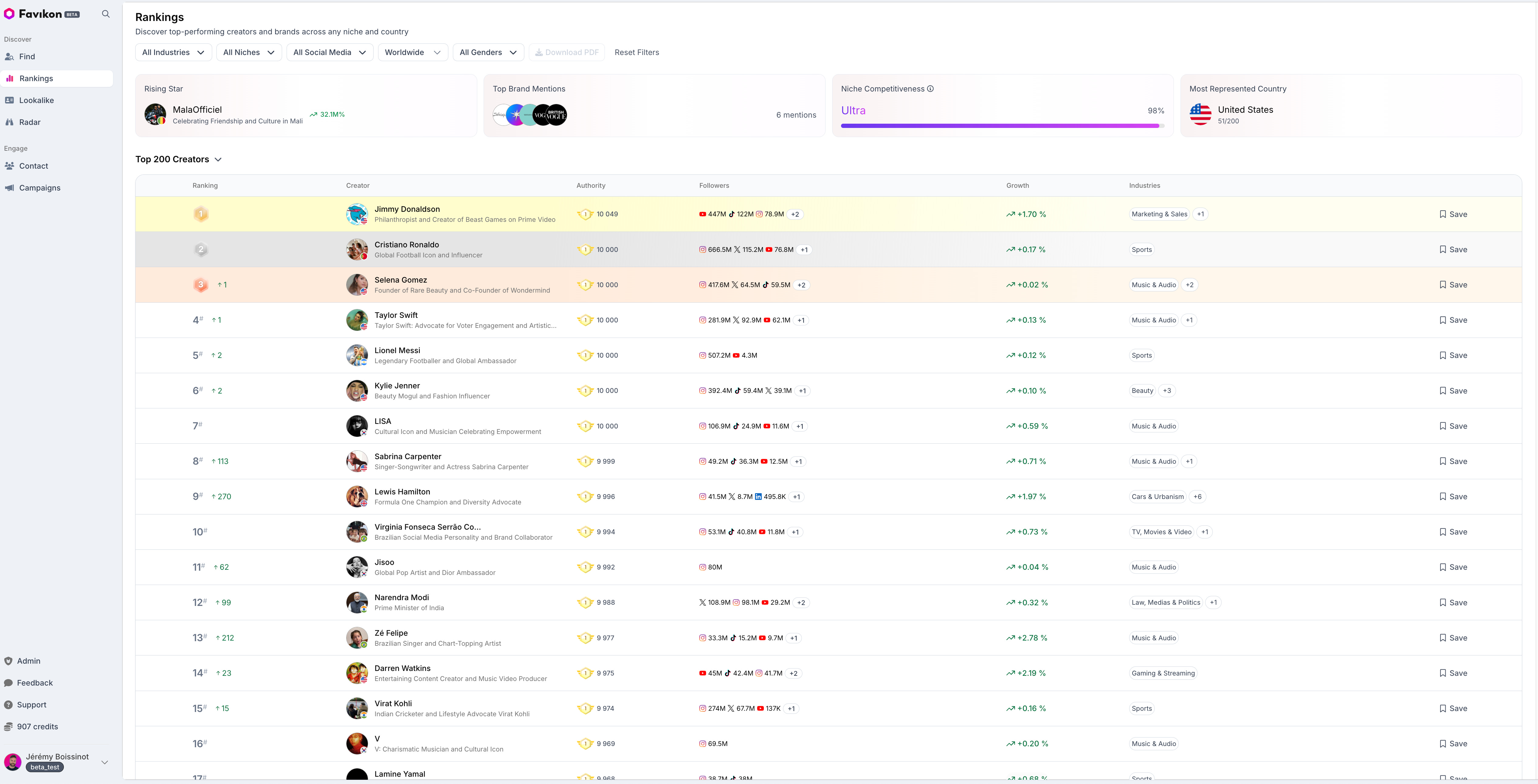
On November 10, we’re launching the new AI-powered Favikon: a full platform for anyone working with creators.
Here’s what’s coming:
AI Inbox: Talk to and negotiate with creators through an AI assistant that learns from your past interactions.
AI Search: Describe what you’re looking for ( “Gen Z founder, sustainability, SaaS”)and get instant results.
Radar: Track who your competitors are working with and see what campaigns are happening in real time.
Lookalike: Find creators who perform like your best ones, based on audience overlap and engagement data.
It’s the first full workflow for influencer marketing that goes beyond discovery.
You’ll be able to search, contact, analyze, and manage creators, all in one place. For agencies and brands, that means faster campaigns and better results.
For creators, it means more visibility to the right partners.
Let me know in the comments if you want to test it!
5. What this means for you
If you’re a creator:
Stop focusing on viral reach. Focus on being credible. The algorithm now rewards consistency and real insight.
You don’t need millions of views, you need loyal readers who trust your word.If you’re a brand or agency:
The real growth is in local markets.
Some of the best B2B voices right now aren’t in London or New York, they’re in Lagos, São Paulo, and Bangalore.
Invest where creators are building genuine communities, not inflated metrics.If you’re in B2B or tech:
LinkedIn is now your main stage.
Posting once a week is no longer enough.
You’re competing with professionals who’ve turned LinkedIn into their personal media channel. The earlier you start sharing your expertise, the easier it gets to stand out.
The bottom line
LinkedIn isn’t a platform for content anymore. It’s a platform for authority.
People follow you because you make them think, not because you post daily.
And on November 10, we’ll give you the tools to find, vet, and collaborate with these voices, all in one place.
The next phase of Favikon starts then.
And it’s built for this new era of creators who think, build, and share like professionals.
Hi Jérémy, this really resonated. We were just discussing stepping back from LinkedIn for a while, and your insights couldn’t have come at a better time. I’m curious to see how Favikon’s new AI features might shift that experience, would love to test it out!