
AI won't replace creators. It'll replace the ones who weren't creating anything.
Most creators were never making something unique. They were just filling space with formulas, and AI does that better, faster, and cheaper.

Everyone’s panicking about the wrong thing.
You must have seen this take countless times: “it’s so over for influencers” because duh AI influencers will make everything better and cheaper.
But that’s not what’s happening.
AI isn’t replacing creators. It’s calling their bluff.
The pattern we’ve seen before
Joseph Schumpeter studied how capitalism evolves. He noticed something: technology doesn’t just replace jobs. It destroys entire industries while creating new ones nobody saw coming.
The steam engine didn’t just replace horses. It killed the stable industry, the feed industry, the buggy manufacturers. But it created railroads, which created shipping logistics, which created suburbs, which created commuter culture. Jobs that didn’t exist before suddenly employed millions.
The people breeding horses didn’t become train engineers. That’s the part everyone forgets. Creative destruction means some people get destroyed. The economy grows, but not everyone makes the transition.
This pattern repeats constantly. And every time, people focus on what’s dying instead of what’s being born.
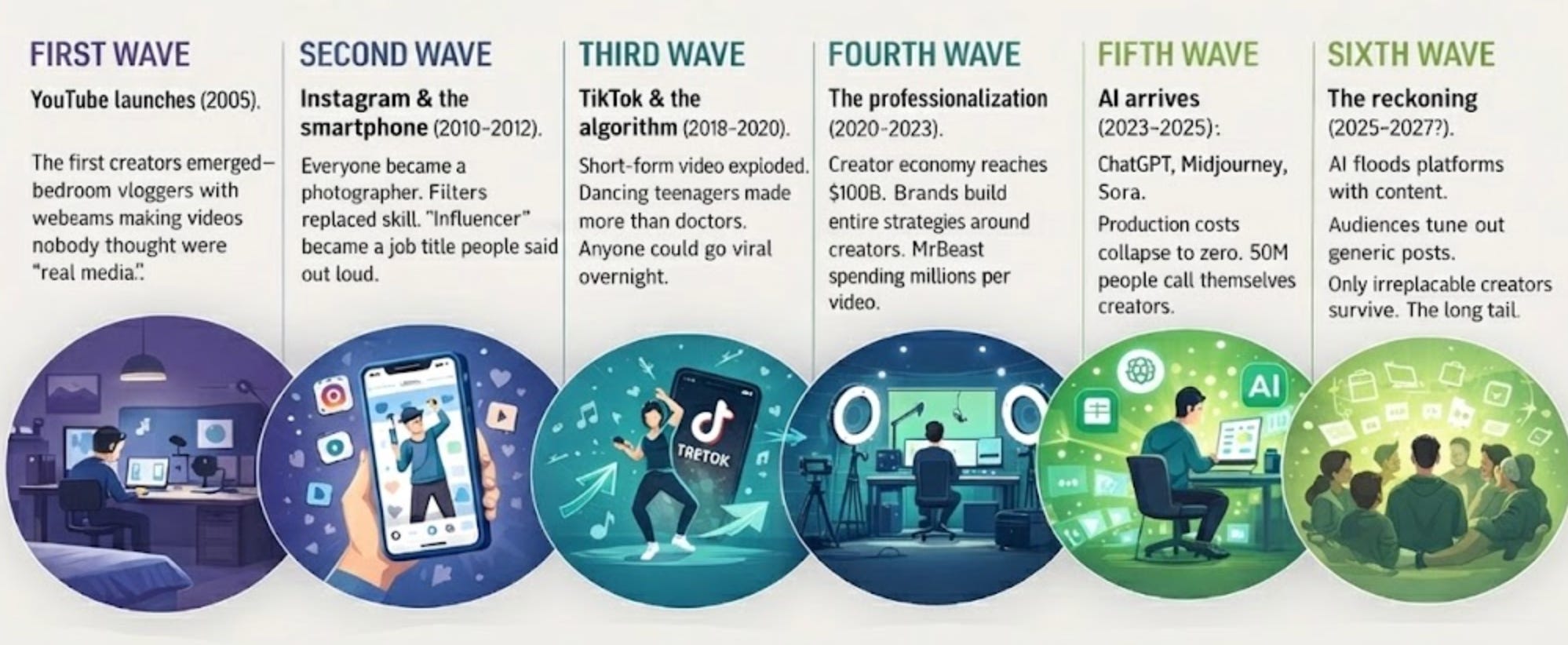
The creator economy followed this exact pattern. YouTube launched in 2005 with bedroom vloggers making videos nobody thought were “real media.” Then Instagram turned everyone into a photographer. TikTok made dancing teenagers richer than doctors. By 2023, the creator economy hit $100B and brands were spending millions per video.
Now we’re in the fifth wave. AI arrives. ChatGPT, Midjourney, Sora. Production costs collapse to zero. 50M people call themselves creators.
But this time, the destruction part hits different.
What most creators actually do all day
Let’s be specific about what gets automated.
Sarah runs an Instagram account for a local coffee shop. She spends three hours every Monday writing captions for the week. “Happy Monday! What’s your favorite coffee order?” type stuff. She finds stock photos of coffee cups. She schedules posts. She responds to comments with “Thanks for stopping by!”
AI does all of that now. In ten minutes.
Marcus makes YouTube videos about productivity. He films himself talking for twenty minutes, then spends six hours editing. Cutting pauses. Adding B-roll of someone typing on a laptop. Putting text on screen. Color correcting. Exporting versions for YouTube, Instagram, TikTok.
AI handles the editing. The B-roll generation. The reformatting. The color grading.
Jen writes blog posts for a marketing agency. “10 Tips for Better Email Subject Lines.” “How to Improve Your Social Media Engagement.” She researches competitors, finds what’s ranking, writes 1500 words following the same structure everyone uses.
ChatGPT writes those posts faster than she can outline them.
This is what’s getting automated. Not creativity. Admin work disguised as content creation.
The problem is, for many creators, that admin work was the whole job.
Where Schumpeter’s pattern breaks down
This is where the optimistic takes go wrong.
When factories automated, displaced workers found different jobs. A coal miner didn’t become a software engineer, but his kid might have. The economy created enough new roles to absorb people over time.
But look at what’s happening with AI and creators.
The “new jobs” everyone points to:
AI strategist.
Prompt engineer.
Content architect using AI tools.
Those jobs require the same skills that made you a good creator originally. Taste. Judgment. Understanding what resonates with an audience.
So it’s not really new jobs for different people. It’s the same jobs for fewer people who were already better at them.
Let me get specific.
At Favikon, we analyze millions of creators across platforms. We’ve watched this play out in real time over the past year.
The creators growing right now fall into clear categories:
1- People with genuine expertise.
A dermatologist explaining skincare science. A former Tesla engineer breaking down EVs. A restaurant owner sharing actual kitchen techniques. They use AI to handle editing and distribution, but their authority can’t be automated.
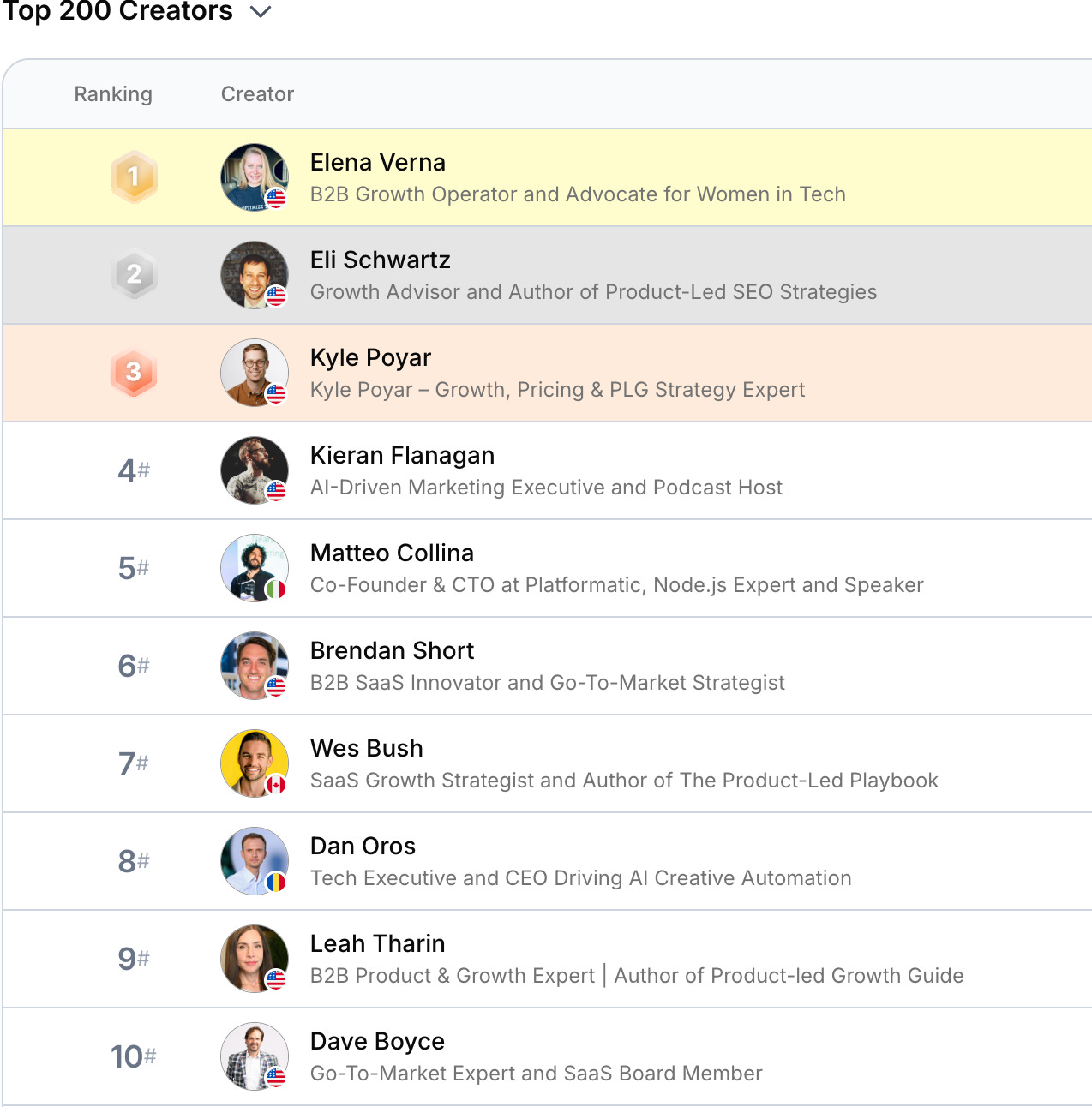
Look at the top 10 PLG creators above. They’re not getting replaced anytime soon. If anything, AI enhances their work.
2- People with distinctive personalities.
They’re not just sharing information. They’re sharing perspective. Hot takes. Specific life experience. The kind of stuff where you’d know it was them even without seeing their name.
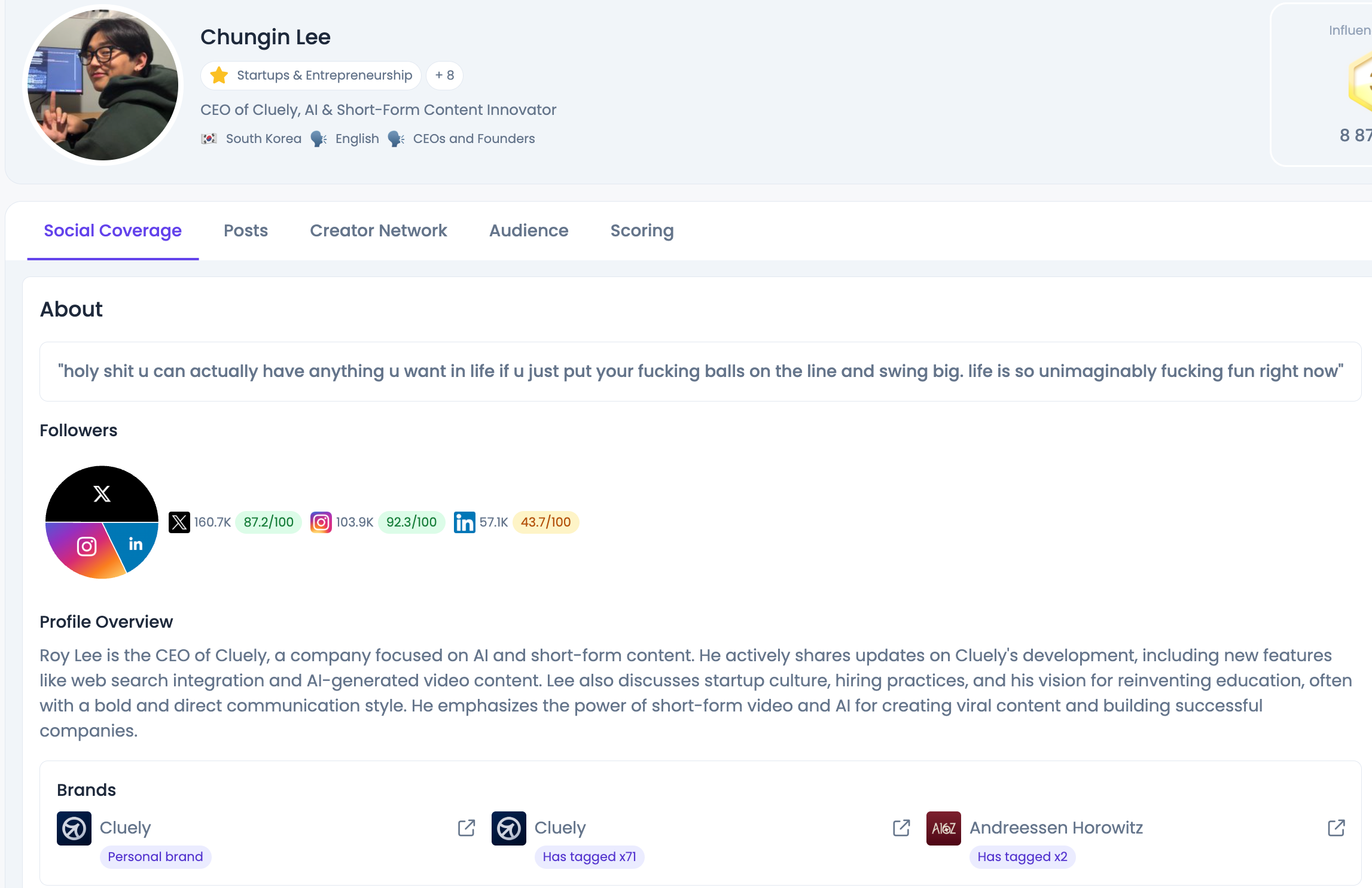
Chungin Lee is a perfect example of what survives the AI wave.
He’s the CEO of Cluely, building AI tools for short-form content. He’s deep in the technology that’s supposedly killing creators. But his personal brand is thriving.
Look at his main quote: “holy shit u can actually have anything u want in life if u just put your fucking balls on the line and swing big. life is so unimaginably fucking fun right now”
That’s not professional speak. That’s not optimized engagement bait. That’s just him. Raw. Unfiltered. The kind of voice you recognize instantly.
He shares startup updates, hiring practices, his vision for education. But people don’t follow him for the information. They follow him for how he delivers it. Bold. Direct. No corporate polish.
You could feed ChatGPT all his posts and tell it to write like him. It would produce something similar. But it wouldn’t have that edge. That specific energy.
At Favikon, this is exactly what we measure for authenticity. Does the audience follow the person or just the content format? With Chungin, it’s clearly the person.
AI can handle his distribution, editing, posting schedule. But it can’t be him. And that’s why he’s not getting replaced.
The test is simple: remove your name from your content. Would your audience still know it’s you?
For Chungin, absolutely. For most creators? Not a chance.
3- People building real community.
They remember regulars. They respond thoughtfully. They create space for conversation. AI can’t fake that kind of relationship over time.
Everyone else? They’re stalling out.
We can see it in the data. Generic lifestyle influencers who post aesthetic photos with vague captions about manifestation and growth. They’re getting crushed. Their engagement is collapsing because audiences can’t tell them apart anymore, and now AI can generate infinite variations of the same content.
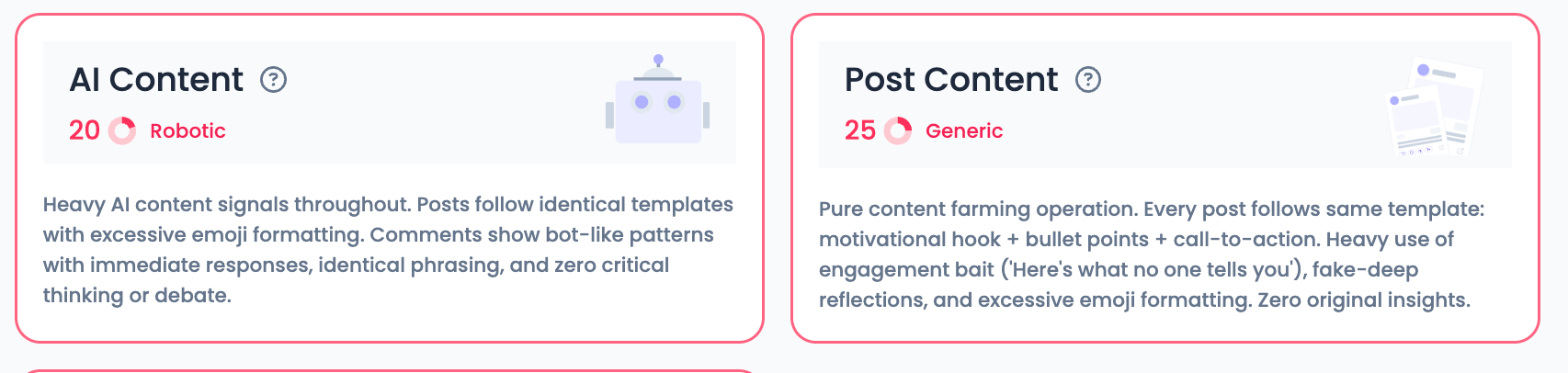
The coffee shop Instagram manager posting “Happy Monday”? That account doesn’t need a person anymore. The business owner can automate it.
The authenticity problem nobody wants to admit
Here’s what makes this different from previous waves of automation.
Content creation was supposed to be about authenticity. About real people sharing real perspectives. That was the whole pitch of the creator economy versus traditional media.
But most creators weren’t being authentic. They were following formulas. Copying what worked. Chasing algorithms. The “authentic personal brand” was a performance optimized for engagement.
AI can do performance. It can analyze what works and replicate it. It can’t be genuinely authentic, but most creators weren’t either.
Look at what happened with Intermarché’s Christmas ad in France. The supermarket chain released “Le mal aimé” (The Unloved), a two-minute animated story about a wolf trying to fit in. Traditional animation. 80 people spent a year making it. No AI shortcuts.
It went viral worldwide. Hundreds of millions of views. People sharing it with subtitles across every platform. Genuine emotional reaction.
Compare that to Coca-Cola’s AI-generated Christmas ad from the same period. Generic AI visuals. Soulless. People called it “creepy” and “slop.” It became a punchline.
The difference? One was made by humans telling an actual story. The other was assembled by algorithms mimicking what Christmas ads usually look like.
Audiences aren’t stupid. They can tell the difference.
At Favikon, we built our rankings around authenticity metrics specifically because we saw this coming. We measure whether creators actually engage with their audience. Whether their content reflects genuine expertise or just trend-hopping. Whether they’re building something real or just farming impressions.
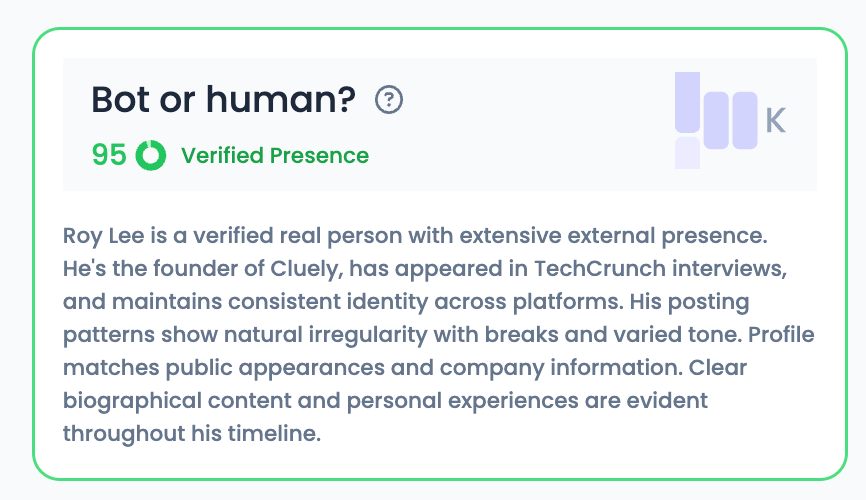
The creators who score high on authenticity are doing fine. Better than fine. AI removes busy work and lets them focus on what made them valuable.
The ones who scored low? They’re discovering their audience doesn’t actually care about them specifically. Just the content format. And AI replicates formats.
The math that doesn’t add up
Let’s talk about what happens to the people who can’t make this transition.
Schumpeter’s creative destruction worked because the economy grew faster than jobs disappeared. More total opportunity, even if specific roles vanished.
But attention is finite. There are only so many hours in a day people can spend consuming content.
When everyone can produce content at scale, you don’t get more consumption. You get brutal competition for the same limited attention.
Think about what happens to a generic travel blogger. Before AI, they had an edge because making decent content required effort. They’d go somewhere, take photos, write captions, edit, post consistently. That consistency had value because it was hard.
Now a travel company can generate that content automatically. Better photos (Midjourney doesn’t have bad angles). More posts (no human bottleneck). Optimized captions (tested across thousands of variations).
The blogger doesn’t become an “AI travel content strategist.” They just stop making money from travel content. Maybe they find another job. Maybe it’s worse.
The hotel chains and tourism boards that used to hire travel creators are running AI-generated campaigns now. Cheaper, faster, more consistent.
Where does that person go?
What this actually looks like in five years
Let’s project forward with concrete examples.
Instagram fitness influencers posting generic workout routines
Most of them are gone. Why follow a random person doing bicep curls when an AI trainer can generate personalized routines based on your equipment, goals, and progress?
The fitness creators who survive have something else. Maybe they’re physical therapists with actual medical knowledge. Maybe they have a specific personality that makes workouts entertaining. Maybe they built a community where people know each other.
LinkedIn thought leaders posting engagement bait
“Want to know the secret to success? Read below.” That content is fully automated now. Some AI tools literally have a “LinkedIn engagement post generator” feature.
The LinkedIn creators who survive are sharing genuine professional expertise. Detailed case studies from their work. Specific technical knowledge. Stories that reveal something about their actual experience, not just recycled platitudes.
YouTube explainer channels
The ones that just summarize topics with stock footage and a voiceover? Dead. AI does it better and publishes twenty videos a day.
The ones that survive have hosts with personality. Or access to unique footage. Or expertise that requires real understanding to explain properly.
Food bloggers posting recipes with a life story before the ingredients
Google’s AI already summarizes recipes. You don’t need the blog anymore.
The food creators who survive are doing something AI can’t. Testing weird techniques. Explaining the science. Building cookware brands. Creating communities of people who actually cook together.
See the pattern?
❌ Generic content is finished.
❌ Formulaic content is finished.
❌ Content that exists just to feed an algorithm is finished.
What survives is the stuff that requires genuine human qualities. Expertise. Personality. Community. Perspective.
The question you should actually be asking
Not “will AI replace creators?”
But “was I ever creating anything that required me specifically?”
If someone else could produce basically the same content, you’re in trouble. If AI can produce basically the same content, you’re finished.
If what you make requires your specific expertise, perspective, or personality, you’re fine. Probably better than fine, because AI removes the boring parts of your job.
At Favikon, we rank tens of thousands of creators. The ones at the top of our rankings have one thing in common: they’re irreplaceable. Their audience follows them specifically, not just their content category.
The ones struggling are those for whom heir audience doesn’t actually care about them. Just the content format. And formats are easy to replicate.
This isn’t creative destruction in Schumpeter’s sense. It’s not spawning massive new industries that absorb displaced workers.
It’s more like every other white-collar consolidation. Fewer people doing more work. Higher standards. Less room for the mediocre middle.
Some creators will thrive. They’ll use AI to amplify what made them valuable in the first place.
Most will discover they were only viable because of artificial scarcity. Because making content used to be hard enough that “good enough” could find an audience.
That scarcity is gone.
What’s left won’t be bigger. It’ll be more concentrated, more competitive, and far less forgiving.
That’s not the end of the creator economy. It’s just the end of pretending everyone who wants to make it actually can.
TLDR
The creator economy isn’t dying. It’s just becoming honest about what it always was. For years, we sold the idea that “anyone can make it” if they just post consistently and stay authentic. AI is forcing us to admit the uncomfortable truth: most creators weren’t actually creating anything valuable, just filling space in an attention economy with artificial scarcity. That scarcity is gone. Schumpeter was right about creative destruction creating new opportunities, but he never promised those opportunities would go to the same people who got displaced. The stable hands didn’t become train engineers. The generic lifestyle influencer isn’t becoming an AI strategist. Some creators will use AI to amplify what made them irreplaceable. Most will discover they were never irreplaceable to begin with. The question isn’t whether you can adapt to AI. It’s whether there was ever anything real to adapt in the first place.